This webpage is designed to guide researchers, healthcare professionals, and motivated individuals in exploring patient vitals data to uncover actionable insights. By providing resources, examples, and analysis techniques, users will learn how to compare treatment outcomes, identify trends, and make data-driven healthcare decisions.
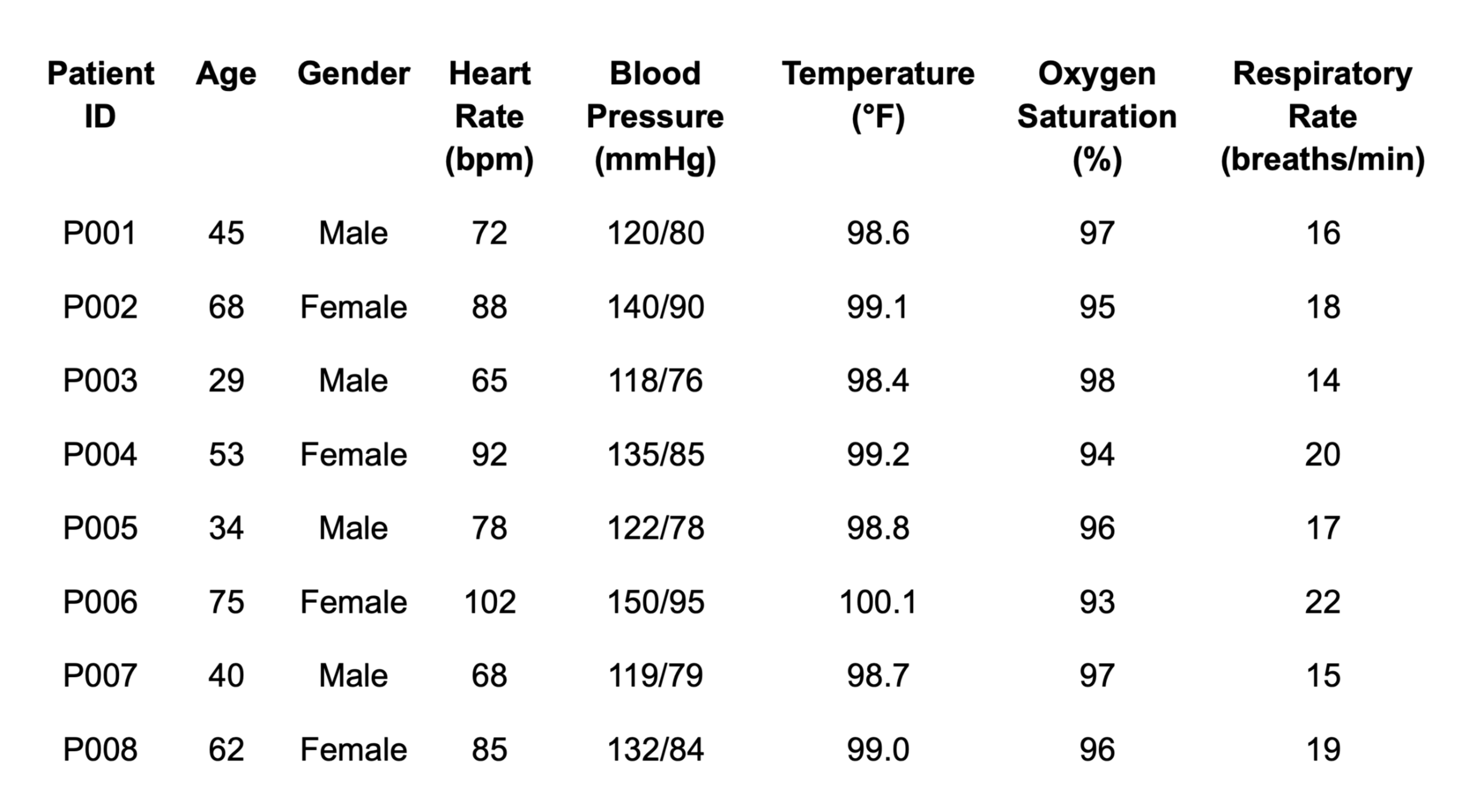
Patient vitals data includes key health metrics such as heart rate, oxygen saturation, respiratory rate, blood pressure, and temperature. These metrics are critical indicators of patient health and are used to assess treatment effectiveness, identify medical emergencies, and monitor chronic conditions.
For example, the Patient Vital Status (PVS) quantifies a patient's physical status based on continuous variables such as vital signs and deviations from age-dependent normative values. Researchers often use this data to predict patient outcomes, track recovery, and inform clinical decisions.
Motivated individuals can utilize this information to compare the effectiveness of different treatments, evaluate trends, and even predict outcomes in specific medical scenarios.
The following websites are reliable resources for exploring patient vitals data. Each site provides unique datasets and tools to help users analyze and compare vital signs for different populations and treatment methods.

The National Early Warning Score (NEWS) 2 system is widely used in healthcare to monitor vital signs and predict patient deterioration. This system standardizes the tracking of patient vitals, providing a scoring framework for evaluating critical cases.
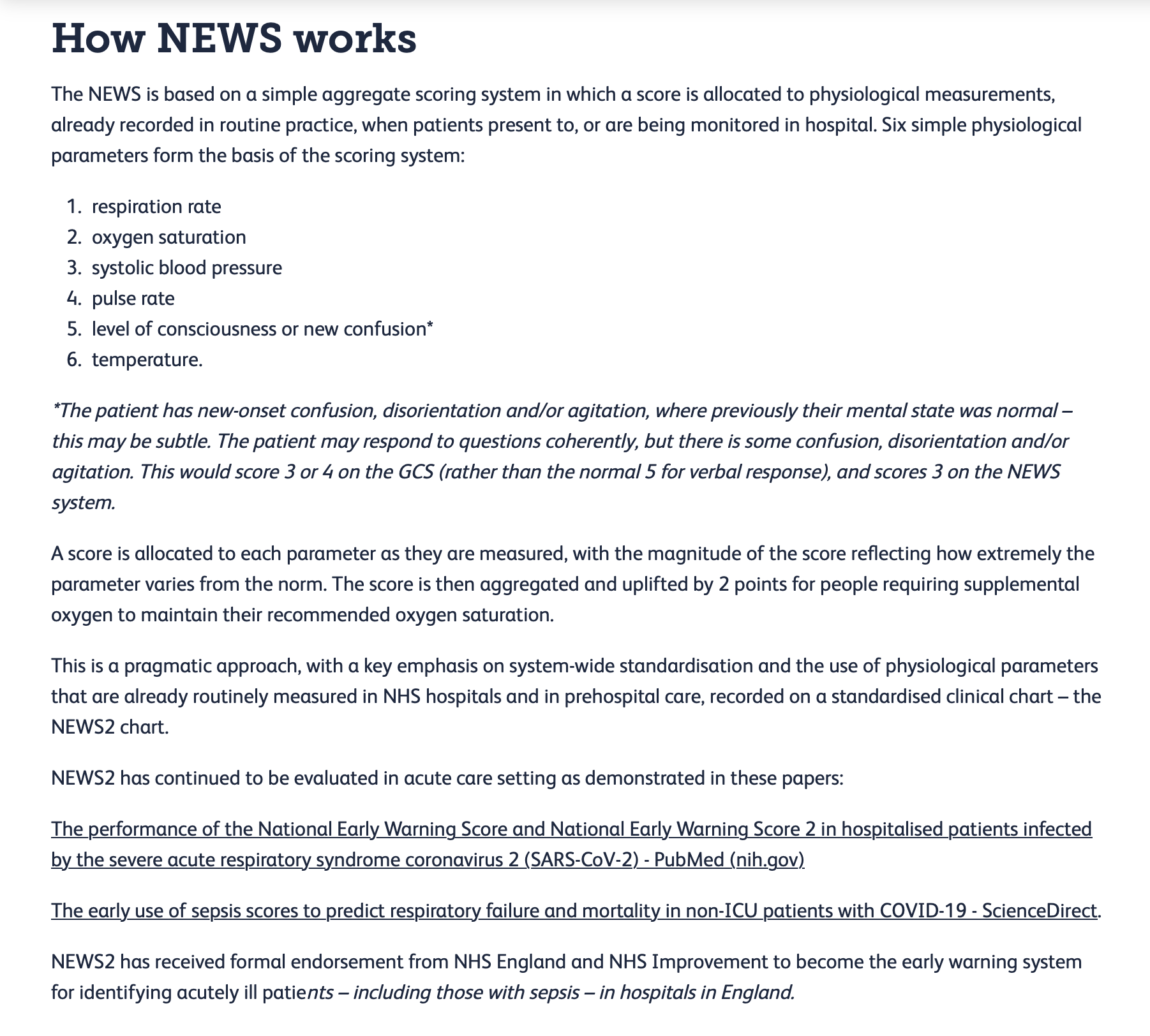
Screenshot: Example of the NEWS 2 scoring system in use, showing how patient vitals are aggregated into a predictive score for healthcare interventions.

HealthData.gov is a comprehensive resource for open health data provided by the U.S. government. The site includes patient vitals datasets that allow users to analyze trends, compare metrics, and evaluate outcomes across various health demographics.
Screenshot: Example of patient vitals data from HealthData.gov, showing how users can filter and download datasets to analyze specific health metrics.

The Global Health Observatory (GHO) by the WHO provides global health statistics, including patient vitals and treatment outcomes. Users can explore datasets comparing vital sign trends across countries, demographics, and time periods.
Screenshot: Example of global patient vitals data from the WHO GHO, highlighting trends across different countries and demographics.
Here's a practical example of how to use the presented resources and datasets to analyze patient vitals data and draw actionable insights:

Step 1: Analyze an Individual Patient's Vitals (NEWS 2)
In this example, the patient has a respiratory rate of 24 breaths/min, oxygen saturation of 92%, and heart rate of 102 bpm. Using the NEWS 2 scoring chart, their total score is 6, indicating a critical need for medical intervention. This highlights how individual metrics contribute to overall risk assessment.

Step 2: Compare Against National Trends (HealthData.gov)
Using national data trends for blood pressure among adults aged 50+, we can see that average blood pressure increased from 135/85 in 2020 to 140/90 in 2021 but decreased slightly to 138/88 in 2022. Comparing the patient's blood pressure to these averages helps identify whether they fall within national norms or are at higher risk.

Step 3: Place in Global Context (WHO GHO)
Global data reveals disparities in hypertension prevalence: Japan has a much lower rate (18%) compared to the United States (25%) and India (28%). Understanding these differences helps identify how regional factors like diet, healthcare quality, and lifestyle might influence patient outcomes.
Final Insight: By combining these datasets, healthcare professionals can identify at-risk individuals, track national health trends, and assess global health disparities to develop better-targeted interventions.
Patient vitals data is a powerful tool for evaluating treatment outcomes, monitoring health trends, and optimizing healthcare delivery. By using the resources provided on this page, motivated researchers and healthcare professionals can gain meaningful insights to improve patient care and outcomes. Start exploring the datasets today to make data-driven decisions in healthcare!